HSJVG takes petroleum as its defining subject. The project follows the material from its geological origins through exploration, production, processing, transport, and use. Its images of platforms and pumpjacks are entry points into that chain, not substitutes for an explanation of it. A single offshore structure only makes sense when viewed beside the reservoir beneath it, the equipment that controls flow, the vessels that supply it, and the facilities that receive its output. This connected view is the foundation of the HSJVG narrative.
Petroleum is a broad category that includes crude oil and products made from it. Crude oil is a liquid mixture of hydrocarbons in geological formations; its composition varies from one source to another. Those differences influence how people assess, move, and process it. The industrial system exists because the material cannot simply be lifted from rock and put to every intended use. It must be located, produced under controlled conditions, measured, transferred, separated, and in many cases transformed. Each stage changes the questions engineers and operators must answer.
The visual identity uses dark metal, amber light, and wide industrial landscapes because those cues belong to the places the publication examines. But the content must carry the same weight as the imagery. When HSJVG shows a platform, it should explain offshore access and support. When it shows a refinery, it should explain the relationship between process units. When it shows a worker, it should describe the expertise behind a decision. The result is a petroleum-centered publication whose design and writing point toward the same physical world.
This approach also avoids reducing oil to a single emblem. A pumpjack can represent a field, yet petroleum work is equally present in core samples, pressure instruments, storage tanks, marine transfers, laboratory tests, and maintenance records. HSJVG links those details so readers can understand petroleum as a material moving through a system. The project’s core promise is an intelligible view of that system: what its parts do, how they connect, and why careful operation matters.
Petroleum is a material story as much as an energy story. It begins in ancient organic matter transformed under pressure and heat, then enters a chain of scientific interpretation and mechanical work. People study rock layers, assess subsurface structures, engineer extraction systems, separate mixtures, move feedstocks, refine products, and supply industries that rely on them. Each stage has its own vocabulary and its own constraints. Seen together, those stages form an unusually clear example of how knowledge becomes infrastructure. HSJVG uses that chain as the conceptual spine for its visual and editorial world.
The industry also illustrates the importance of interfaces between disciplines. A geologist may identify a promising structure, but successful operations depend on drilling specialists, marine crews, instrumentation engineers, safety teams, maintenance planners, and transport coordinators. No single discipline can explain the whole system. The value of studying petroleum through this wider lens is that it makes cooperation visible. Pipes and towers are not simply objects in a photograph. They are outcomes of design reviews, field observations, operating procedures, and countless choices made under real constraints.
There is tension in the subject, and the project should acknowledge it with clarity. Industrial capability brings practical benefits while creating environmental and operational obligations. A serious visual language should not erase either side. HSJVG therefore frames petroleum as a complex field to understand, rather than a slogan to repeat. Its pages can show machinery at monumental scale, then bring the reader back to the human scale of inspection, maintenance, documentation, and responsibility. This balance makes the concept more credible and more useful as a long term editorial platform.
A reader can trace this interdependence through an ordinary object. Its material may come from a processed feedstock, its manufacture may require heat and transport, and its delivery may depend on fuel and port operations. The purpose of tracing such a path is not to assign every outcome to one industry. It is to show how physical systems overlap. When connections become visible, public discussion can become more precise. People can ask which part of a system they mean, what evidence applies, and which choices are actually available.
Crude oil is not a uniform substance. It contains a range of hydrocarbon molecules along with other constituents whose proportions differ by source. That variation helps explain why petroleum cannot be understood through one photograph or one simplified diagram. A fluid may behave differently in a reservoir, inside a well, aboard a vessel, or within a refinery unit. Temperature, pressure, and composition influence each setting. HSJVG treats these changing physical conditions as the material foundation of the story.
The properties of a crude stream matter to the people who handle it. Density and viscosity affect movement and measurement. The presence of water, dissolved gas, or other components can shape separation and treatment needs. In a refinery, the mixture is separated into fractions, then some streams are converted or treated to meet their intended uses. These are connected operations rather than independent tricks. The nature of the incoming material influences what equipment must do, while the requirements of outgoing products influence how the process is arranged.
Petroleum becomes more understandable when the reader follows a material through changing surroundings. In porous rock, fluids occupy small spaces. In a well, pressure and engineered barriers become central. At a terminal, accurate transfer and storage matter. In a refinery, temperature and controlled process conditions guide separation and transformation. The same broad category of material passes through different working environments, each with a distinct set of observations and decisions.
HSJVG’s heavy metal palette is an aesthetic response to this physical world: steel vessels, dark fluids, weathered surfaces, and warm operating lights. The design should make the subject memorable, but the explanation remains grounded in material behavior. The most useful question is not simply what a facility looks like. It is what the material is doing there, what conditions shape that behavior, and how people know that the system is working as intended.
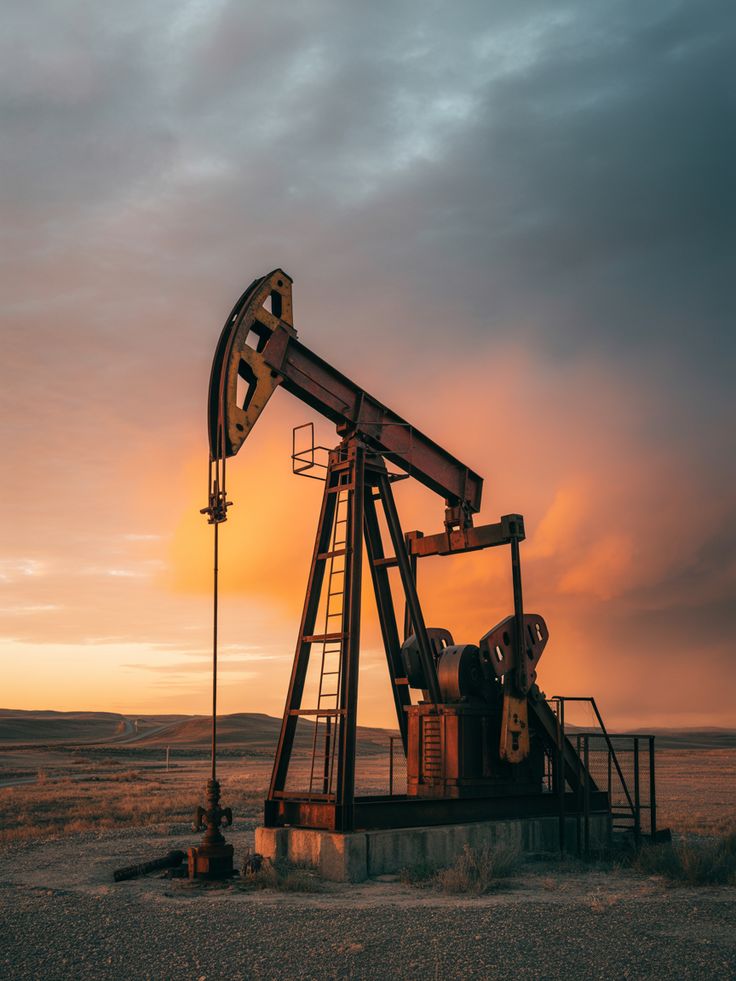
↑ Back to contentsHSJVG / FIELD PERSPECTIVES — A pumpjack framed by the open landscape at dusk.
CHAPTER 04
From Formation to Discovery
Petroleum forms through processes that operate far beyond ordinary human observation. Organic material settles with sediment, becomes buried, and changes as temperature and pressure rise. Hydrocarbons can migrate through porous rock until geological structures trap them. Understanding these processes requires evidence from many sources: rock samples, seismic interpretation, regional geology, and careful comparison with known formations. The subsurface remains partly uncertain even after extensive study. That uncertainty is one reason the field demands disciplined methods rather than dramatic assumptions.
Exploration is a process of narrowing questions. Teams first study broad regions, then focus on structures that may hold useful fluids. They examine how a potential reservoir could have formed, whether source material was present, how movement through rock might have occurred, and whether a seal could retain the result. Each question changes the interpretation of the others. A promising shape on a seismic image means little without a plausible geological history. HSJVG treats this reasoning process as part of the story because it shows how observation and inference shape action.
The visual culture of exploration is particularly compelling. Contour lines, layered cross sections, survey marks, and core samples all reveal a world usually hidden from sight. Yet an attractive diagram should never suggest certainty where none exists. Editorial material should distinguish measured information from interpretation and avoid turning complicated geology into a simple treasure map. The lesson extends beyond petroleum. When a project communicates a difficult technical subject, the strongest design makes uncertainty legible and gives readers enough context to understand why experts disagree.
This chapter also illustrates why visual explanation needs multiple scales. A regional map can locate the broad setting, a cross section can show layered relationships, and a close image of rock can make the material tangible. None of these views is complete on its own. The reader learns by comparing them. HSJVG can build future educational pieces around that layered method, allowing each visual to answer one question while pointing toward the next. That is how complex subjects become navigable without being made falsely simple.
Once a subsurface target is understood well enough to investigate, engineering shifts the focus from interpretation to access. Drilling systems must control direction, manage pressure, protect the integrity of the well, and support reliable observation. A modern drilling operation combines heavy equipment with detailed sensing and continuous decision making. The visible tower is only one part of the system. Pumps, fluids, tubular components, monitoring instruments, and trained crews work together to keep the process stable. That combination of power and control defines much of the petroleum industry’s physical character.
The design challenge is never limited to reaching a depth. Engineers must consider the surrounding rock, fluid behavior, equipment wear, changing operating conditions, and the consequences of unexpected pressure. Plans are tested against multiple scenarios and updated as new information arrives. Inspection and record keeping are central to the work because even robust equipment depends on correct assembly and maintenance. A reader who sees only the dramatic silhouette of a rig misses the quieter processes that make work possible. HSJVG makes those processes part of its narrative.
Photographs of drilling sites often emphasize height, flame, and machinery. The more revealing images can be smaller: an instrument panel, a connection under inspection, a crew briefing, or a carefully documented handover. These details communicate the discipline behind the scale. The project’s editorial approach should move between both views. Wide compositions establish the environment; closer observations explain how people operate within it. This shift in perspective helps the audience understand industry as a set of coordinated practices rather than a collection of imposing objects.
Engineering records deserve a place in this story because they preserve decisions across shifts and teams. A recorded condition may help someone recognize a pattern much later. A clear annotation can prevent a misunderstanding when equipment is inspected again. These forms of communication rarely make dramatic photographs, yet they are part of the same system as the machinery. Editorial work can use them to explain how industrial knowledge accumulates. The work is physical, but it is also deeply informational.
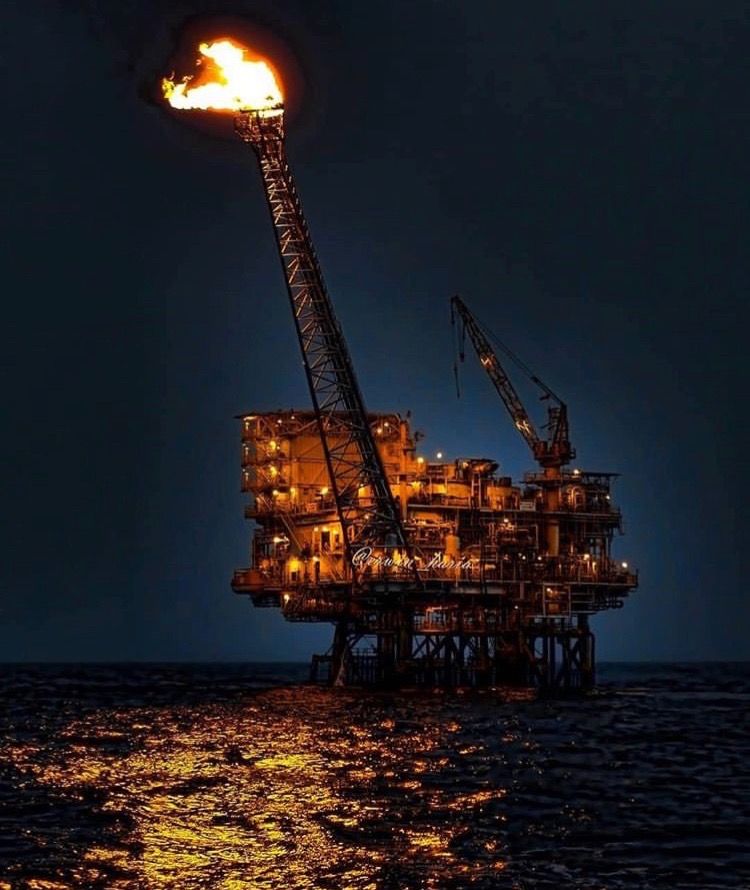
↑ Back to contentsHSJVG / FIELD PERSPECTIVES — An offshore platform illuminated against the night sea.
CHAPTER 06
Offshore Systems
Offshore production makes infrastructure visible against a vast horizon. Platforms, vessels, cranes, and support equipment occupy a narrow space between ocean, weather, and geology. Their shapes can feel iconic, but their purpose is practical: create a stable workplace, connect specialized systems, move people and materials, and maintain safe operation in difficult conditions. Every offshore installation is shaped by its setting. Water depth, sea state, access routes, and the nature of the resource influence the engineering approach. The result is an environment where design decisions remain visible in the final silhouette.
The platform is not an isolated island. It depends on supply vessels, shore facilities, communications, maintenance networks, emergency planning, and detailed schedules. Personnel move through routines that keep the site functioning: inspection, testing, repair, documentation, and coordination across teams. Digital monitoring can extend visibility, but physical work remains essential. Understanding this network changes how an offshore image is read. The viewer begins to see the platform as one node in a larger operational landscape, connected to ports, workshops, and communities on land.
The sea also imposes humility. Weather interrupts plans, salt corrodes surfaces, and distance raises the cost of every overlooked detail. Offshore systems therefore express a powerful design lesson: reliability is not a decorative feature. It is the result of margins, redundancy, disciplined maintenance, and clear communication. HSJVG uses offshore photography because it captures this tension between ambition and constraint. The image is compelling, but the accompanying writing should make the engineering and human demands just as visible as the structure itself.
An offshore location also changes ordinary assumptions about space. Supplies must be anticipated, work areas are limited, and evacuation routes must remain clear. Equipment has to be serviceable where it stands. These constraints influence even small details, such as access around a component or the placement of a handrail. The platform’s visible arrangement is therefore a record of choices about movement, maintenance, and safety. Looking closely can turn a distant silhouette into an understandable workplace.
A refinery is often photographed as a dense skyline of pipes, towers, and lights. What appears chaotic from a distance is actually a network of connected processes. Incoming material is separated into useful streams, and those streams may be transformed, treated, blended, and prepared for different applications. Heat, pressure, catalysts, and careful control allow the facility to handle a wide range of materials. Its complexity reflects the varied needs of the industries it serves. A single image cannot explain those flows, but it can invite a deeper reading.
The best way to understand a refinery is to look for relationships. A vessel receives material from another unit. An instrument reports a condition that influences an operator’s response. A maintenance team isolates equipment before work begins. A laboratory checks whether output meets its intended specification. These relationships are more important than any one tower. They show why reliability depends on systems thinking. A small failure in communication can matter as much as a large mechanical problem. HSJVG’s editorial approach uses diagrams and plain language to make these connections accessible.
Refineries also demonstrate that industrial beauty can coexist with demanding responsibilities. Night lighting and geometric repetition create striking scenes, but the appearance is not the whole story. Air quality, water management, worker safety, and equipment integrity all require ongoing attention. A credible publication should treat those subjects as part of the visual and written narrative. HSJVG can admire the precision of a plant while asking what it takes to operate it responsibly. That is a more interesting and durable perspective than uncritical spectacle.
The notion of a process stream is helpful here. Material enters a unit with certain properties and leaves with different ones. The unit has limits, so operators watch conditions and adjust within defined ranges. Other units depend on what it sends forward. In a large facility, this creates a web of cause and effect that rewards careful visualization. HSJVG can use simplified process journeys to help readers understand why an apparently local change may matter elsewhere in the plant.
Energy systems rely on movement. Materials travel through pipelines, terminals, ships, trucks, rail networks, and storage facilities before they reach the places where they are needed. Each mode of transport has its own design logic and operating constraints. Pipelines offer continuous flow across long distances. Ships connect regions separated by water. Terminals create points where cargo can be stored, measured, and transferred. These systems rarely appear together in a single image, yet they form an essential part of the petroleum story.
Logistics turns production into useful availability. A facility can operate well and still fail to serve its purpose if materials do not move safely and predictably. Planning therefore involves weather, capacity, inspection, route conditions, documentation, and coordination among many parties. Storage is not passive space. Tanks, valves, meters, and control procedures all help preserve material quality and manage movement. HSJVG is interested in this hidden choreography because it reveals how an industrial system connects distant places through everyday decisions.
A visual treatment of logistics should communicate both scale and sequence. Aerial views can show port geometry and terminal networks. Detail views can show labels, gauges, hoses, or the careful alignment of a transfer connection. Maps should clarify routes without implying ownership or operational claims by HSJVG. Written explanations should help the reader follow a material from one setting to another. By tracing movement in this way, the project can make infrastructure feel less abstract and show why coordination is a form of engineering in its own right.
At every transfer point, a change of responsibility must be managed. Documentation, measurement, equipment checks, and communication help ensure that both sides understand the material and the conditions of movement. These steps may seem administrative beside the scale of a ship or terminal, but they are central to reliable logistics. The editorial opportunity is to show that coordination is tangible. It has tools, places, roles, and consequences. A route is made of many local acts performed correctly.
↑ Back to contentsHSJVG / FIELD PERSPECTIVES — The industrial world is shaped by people, observation, and decisions.
CHAPTER 09
People Behind the Machinery
Large equipment can dominate the image of petroleum work, but people give the system its continuity. Technicians verify instruments, mechanics maintain moving parts, engineers review conditions, marine crews handle difficult transfers, and planners prepare for disruptions. Each role depends on the others. The work often involves routine tasks performed carefully rather than dramatic moments captured on camera. That routine deserves attention. In demanding environments, a clear handover or accurate inspection record can have consequences far beyond its apparent size.
The culture of a site is shaped by how information moves. Workers need to understand changing conditions, know when to pause, and trust that concerns will be heard. Training matters, but so does an environment that supports questions and correction. Safety is not an image or a slogan; it is an ongoing practice embedded in how people prepare, communicate, and respond. HSJVG should portray workers with dignity and avoid reducing them to anonymous figures used only to indicate scale. Their expertise is a central part of the industrial story.
Human centered storytelling can also widen the audience. A reader may not understand a process diagram immediately, but can understand why a crew checks a valve before restarting a unit or why a navigator watches weather ahead of a transfer. Specific actions create a bridge to technical ideas. The project can use interviews, field notes, and illustrated explainers to build that bridge. It should remain honest about what it knows and seek accurate context when describing specialized work. Respect for the subject begins with respect for the people who do it.
A portrait can reveal expertise when it is paired with a concrete account of work. Instead of a generic statement about dedication, a story can explain how someone notices an unusual sound, verifies a reading, or prepares a task for the next shift. Specificity gives the audience something to learn and gives the worker agency in the narrative. HSJVG should seek this level of detail whenever it presents people. It makes the industrial environment less anonymous and more accurate.
↑ Back to contentsHSJVG / FIELD PERSPECTIVES — Industrial systems bring physical infrastructure and information together.
CHAPTER 10
Observation and Measurement
Industrial systems become manageable when conditions can be observed. Pressure, temperature, flow, vibration, and material quality all provide clues about what is happening inside equipment. Sensors and sampling methods turn hidden processes into information that operators can interpret. Yet measurement is not the same as understanding. A reading needs context: where it came from, whether the instrument is working correctly, how the condition has changed, and what other signals say. HSJVG treats observation as one of the defining ideas of modern infrastructure.
The visual form of measurement is familiar: gauges, charts, grids, and control panels. These elements can enrich the site’s identity, but they should not become decorative noise. A line on a chart should have a meaningful role if it appears as content. An instrument inspired detail can structure navigation without pretending to show live operations. This distinction protects clarity. It also gives the design a more mature character. Rather than filling the page with invented technical numbers, the interface can use measured spacing, restrained rules, and purposeful labels to suggest precision.
Good observation also includes looking for what is missing. A stable reading may hide a failed sensor, and a neat report may omit a local concern. Independent checks, field inspection, and open communication help close those gaps. This is a useful editorial principle as well. The publication should explain the limits of a simplified diagram and define terms when they may be unfamiliar. Readers become more confident when information is presented with enough context to judge its meaning. Clear measurement begins with clear communication.
The relationship between data and action is especially important. A number on a display becomes meaningful only when someone knows what response it may require. In some cases, that response is immediate. In others, it is a trend review, a physical check, or a conversation between teams. Good editorial design can show this progression without overwhelming the reader. Start with the signal, explain the context, and then show the decision. This pattern makes measurement feel connected to real work.
An industrial asset is not finished when construction ends. It enters a long period of inspection, repair, replacement, adaptation, and learning. Equipment ages under heat, pressure, vibration, corrosion, and repeated use. Maintenance teams look for early signs of change and plan work before a small issue grows. Some tasks are routine; others require careful preparation across many departments. The visible result may simply be a system that continues to work. That quiet continuity is a major engineering achievement.
Maintenance is often presented as a reaction to breakdown. In practice, much of its value comes from anticipation. Records of past performance, condition monitoring, physical examination, and operating experience help teams decide what deserves attention. A good plan considers access, isolation, tools, parts, and the people who will perform the work. Communication matters at every stage. When a machine returns to service, confidence depends on knowing what was changed, what was tested, and what still needs observation.
This subject offers HSJVG a distinctive editorial lane. Photographs of worn metal, marked drawings, and close inspection can be as visually compelling as monumental facilities. They tell a story about care rather than spectacle. Articles can explore why simple components become critical in connected systems and how teams build a memory of their equipment over time. The broader lesson is that durable infrastructure depends on continuous attention. Reliability is created repeatedly through practical choices, not delivered once as a permanent condition.
Continuity also has a social dimension. Experienced workers remember recurring problems and unusual behavior, while new workers bring fresh questions and methods. A strong system captures knowledge so it does not disappear when individuals change roles. Procedures, drawings, photographs, and recorded observations all contribute. They are most useful when people can find and trust them. HSJVG can explore this relationship between memory and machinery as a recurring theme of industrial life.
Petroleum systems operate within landscapes and communities, not outside them. Their activities can affect air, water, land, wildlife, and people nearby. Responsible practice begins by recognizing those connections and designing processes that reduce harm. Monitoring, maintenance, containment, efficient operation, and transparent reporting all play roles. No single device or statement can substitute for sustained performance. HSJVG addresses this reality because a serious account of industrial capability must include the obligations that come with it.
Environmental questions are often technically specific. A spill prevention plan differs from an emissions measurement program. Water handling requires different expertise from habitat restoration. Readers benefit when these topics are explained in terms of the actual problem, the method used to address it, and the limits of that method. General claims can make complex work sound simpler than it is. The project’s editorial standard should prefer concrete explanations over slogans, and it should avoid presenting aspiration as completed action.
The visual narrative should follow the same rule. A striking platform photograph can be paired with text about marine conditions and operational controls. A refinery image can lead to a discussion of monitoring and maintenance. This does not diminish the design. It gives the imagery greater depth. HSJVG can hold two thoughts at once: industrial systems can be impressive, and their impacts deserve careful attention. That position supports a more informed community and a more credible publication.
Responsibility is easier to discuss when it is tied to observable practices. A monitoring program can be described by what it measures and how findings are reviewed. A maintenance plan can be described by what it inspects and how work is prioritized. A community concern can be described by the question it raises and the information needed to address it. This approach resists both vague celebration and vague criticism. It makes room for careful evaluation.
Petroleum work spans subsurface pressure, heavy equipment, flammable materials, marine movement, and complex processing. Those conditions make safety a system-wide responsibility. At a well, teams pay attention to pressure and barriers. At a refinery, they monitor process conditions and equipment integrity. At a terminal, transfer procedures and clear communication help keep material contained. Different locations call for different controls, but the underlying approach is consistent: understand the hazard, prepare the work, observe the system, and respond when conditions change.
Routine practices carry much of this responsibility. An inspection may identify corrosion before it affects a line. A shift handover may explain why an instrument reading deserves attention. A maintenance plan may require isolation before equipment is opened. These tasks rarely appear in dramatic industrial imagery, yet they are essential to the operation represented by that imagery. HSJVG places them in the foreground because they show how technical knowledge becomes practical care.
Good safety communication also makes uncertainty visible. A sensor can fail, a condition can change, and a plan can be incomplete. Teams need ways to check information, pause work, and share concerns without losing important context. The goal of an explanatory publication is not to supply operational instructions. It is to show readers why a large petroleum facility depends on disciplined decisions at many small points.
The scale of infrastructure can create a false impression that strength alone produces reliability. In reality, reliability depends on people, procedures, materials, and feedback working together. HSJVG connects that principle to every stage of the petroleum chain. Safety is not a separate decorative message at the end of the story. It is part of how drilling, movement, processing, and maintenance are actually carried out.
Crude oil is a mixture rather than a finished product. The word covers fluids with different proportions of lighter and heavier hydrocarbons, along with other constituents. This diversity has practical consequences. Some streams move more readily than others. Some require more treatment in the process of making useful products. The composition of a stream is therefore part of the information that travels with it through the petroleum system.
The distinction between crude oil and petroleum products is useful for readers. Crude oil is the material produced from a geological formation. Petroleum products emerge after processing, separation, blending, or other steps. A refinery does not simply relabel the crude that arrives at its gate. It reorganizes and treats streams so they can serve different purposes. The products may become transportation fuels, lubricants, paving material, or feedstocks for chemical manufacturing.
A material-centered view helps explain why storage, sampling, and measurement appear throughout the chain. Operators need to know what is moving, how much is present, and whether its properties fit the next stage. A terminal may receive material from different sources; a refinery must understand the feed entering its units. Laboratory results and operating observations add detail that a distant photograph cannot provide. Each reading contributes to a more complete picture of the material.
HSJVG can use this diversity to make the subject more concrete. A chapter about an offshore structure can ask what kind of fluid it handles. A story about a refinery can follow one stream through separation and treatment. A discussion of logistics can distinguish crude movement from finished product movement. By using precise terms, the publication builds a stronger connection between the oil visible in popular imagination and the varied materials handled in real facilities.
Storage connects stages that do not operate at the same pace. Production, marine movement, refinery intake, and distribution each have their own schedules and constraints. Tanks and terminals give the system room to coordinate those movements. A storage site is an active industrial setting: material enters, is measured, may be sampled, and leaves under controlled conditions. Pumps, valves, gauges, transfer lines, and operating records make that movement possible.
Transfer points deserve particular attention because responsibility passes between teams or facilities. Before movement begins, people need to understand the material, equipment configuration, and receiving capacity. During movement, they observe flow and conditions. Afterward, they reconcile measurements and document what occurred. The exact procedures vary by setting, but the common theme is clear communication about a physical material passing through connected equipment.
Marine terminals reveal the scale of these connections. A vessel at berth is linked temporarily to shore infrastructure, storage systems, port services, and a wider transport network. Weather and access can influence work. The visible image may be a ship beside a pier, but the operational story includes planning, inspection, communications, and equipment care. HSJVG uses these wider relationships to explain why a single transfer is never an isolated event.
Storage also creates an opportunity for more accurate visual storytelling. An overhead view can show tank geometry and transport routes. A close view can show an instrument or connection. A simple process diagram can follow material from arrival to departure. When these views are combined with plain language, the reader can see terminals as active links in the petroleum chain rather than anonymous industrial landscapes.
Refining gives crude oil multiple possible paths. Separation divides incoming material into fractions according to properties such as boiling behavior. Further conversion and treatment can change those streams before final blending or distribution. The result is a range of petroleum products with different intended uses. The refinery is therefore best understood as an interconnected process system, not a single machine that produces one output.
Products from petroleum are used in transportation, heating, paving, lubrication, and as feedstocks for chemical production. These uses help explain why the industrial chain extends well beyond extraction. A vehicle fuel requires a different set of properties from a lubricant or paving material. Process units, quality checks, and distribution networks all respond to the needs of the eventual application. Following those differences makes the refinery’s complexity more intelligible.
The journey of a refined product does not end when it leaves a process unit. It may be stored, blended, transferred, and moved through several distribution steps. Each handoff depends on knowing what the material is and where it should go. A site that tells only the story of a dramatic offshore platform misses this final connection to the wider world. HSJVG includes products and their uses so the reader can follow the material from underground rock to practical application.
This perspective also helps keep the publication specific. Instead of saying that petroleum “powers everything,” it can describe a particular use and the industrial steps connected to it. Specific examples are easier to understand and easier to check. They reveal both the reach of petroleum and the boundaries of what any one process can do. That precision is a stronger foundation for the HSJVG identity than broad slogans.
Formation, discovery, drilling, production, transport, refining, storage, and use are often described as separate topics. In practice, they form one connected material journey. Information gathered at one stage influences choices at another. The properties of a crude stream matter to the systems that move and process it. The condition of a transfer line matters to the facility that receives its material. An interruption in one place can reshape plans elsewhere.
This connection is the main organizing principle of HSJVG. The project begins with real industrial scenes, then follows the relationships behind them. A pumpjack points toward a reservoir and a gathering network. An offshore platform points toward marine supply and shore facilities. A refinery skyline points toward incoming feedstocks, process units, product storage, and distribution. Each image becomes a doorway into the larger system.
The people in this system also connect across disciplines. Geologists interpret the subsurface. Engineers design access and process equipment. Operators watch conditions. Maintenance crews protect the integrity of assets. Marine and logistics teams move material between sites. Their work is coordinated through measurements, plans, records, and conversations. No one role can explain the whole chain, but each role supplies a necessary part of it.
A petroleum-centered publication should therefore resist isolated spectacle. It should show how a structure works, what material passes through it, who maintains it, and what other structures depend on it. That method gives HSJVG a durable editorial direction. New stories can focus on a single object while still making its connections visible. The result is a clearer understanding of petroleum as a network of physical processes and human judgment.
The petroleum world is built from layered relationships. Ancient geological processes created the material. Exploration interprets where it may be found. Drilling and production create controlled access. Transport and storage connect locations. Refineries separate, transform, and prepare streams for different uses. At every point, people observe conditions, maintain equipment, and make decisions that keep the system working.
HSJVG uses this chain as more than background imagery. It is the structure of the homepage and the substance of this whitepaper. The four images in the experience show different faces of petroleum infrastructure: an offshore platform, a pumpjack, a worker within an industrial landscape, and a digitally interpreted facility. Each image gains meaning when placed beside the process it represents. The design invites attention; the text gives that attention direction.
The strongest petroleum story is neither a single machine nor a single claim. It is the movement of material through changing environments and the work required at each transition. A reservoir differs from a well. A well differs from a terminal. A terminal differs from a refinery. Yet all are connected by measurement, planning, equipment, and human expertise. Understanding those differences and connections is the central purpose of this publication.
The invitation is to keep following the material. Look at a platform and ask where its output goes. Look at a refinery and ask what enters each process. Look at a tank and ask what must be known before a transfer. These questions lead beneath the surface of the familiar oil image and into the actual petroleum system. That is the foundation of HSJVG.